The practice that goes
deeper every morning.
Wherever you are starting from.
Upa-yoga is a simple yet powerful system of exercise that activates the joints, muscles, and energy system. Based on a sophisticated understanding of the body’s mechanics, Upa-yoga dispels inertia in the body’s energy and brings ease to the whole system. It relieves physical stress and tiredness.
The Practice
What is,
Upa Yoga?
Upa-yoga essentially means “sub-yoga” or “pre-yoga”. Because of its many immediate and evident benefits, the word Upa Yoga in Indian languages is commonly used to denote “usefulness.”
Within the human system, the energy flows along 72,000 pathways called nadis. At the joints, the nadis meet and form nodes, making the joints storehouses of energy. Upa-yoga activates this energy and also lubricates the joints, creating an instant sense of alertness and liveliness.
- Relieves physical stress and tiredness
- Strengthens the joints and muscles
- Rejuvenates the body after periods of inactivity
- Negates the effects of jetlag and long travel
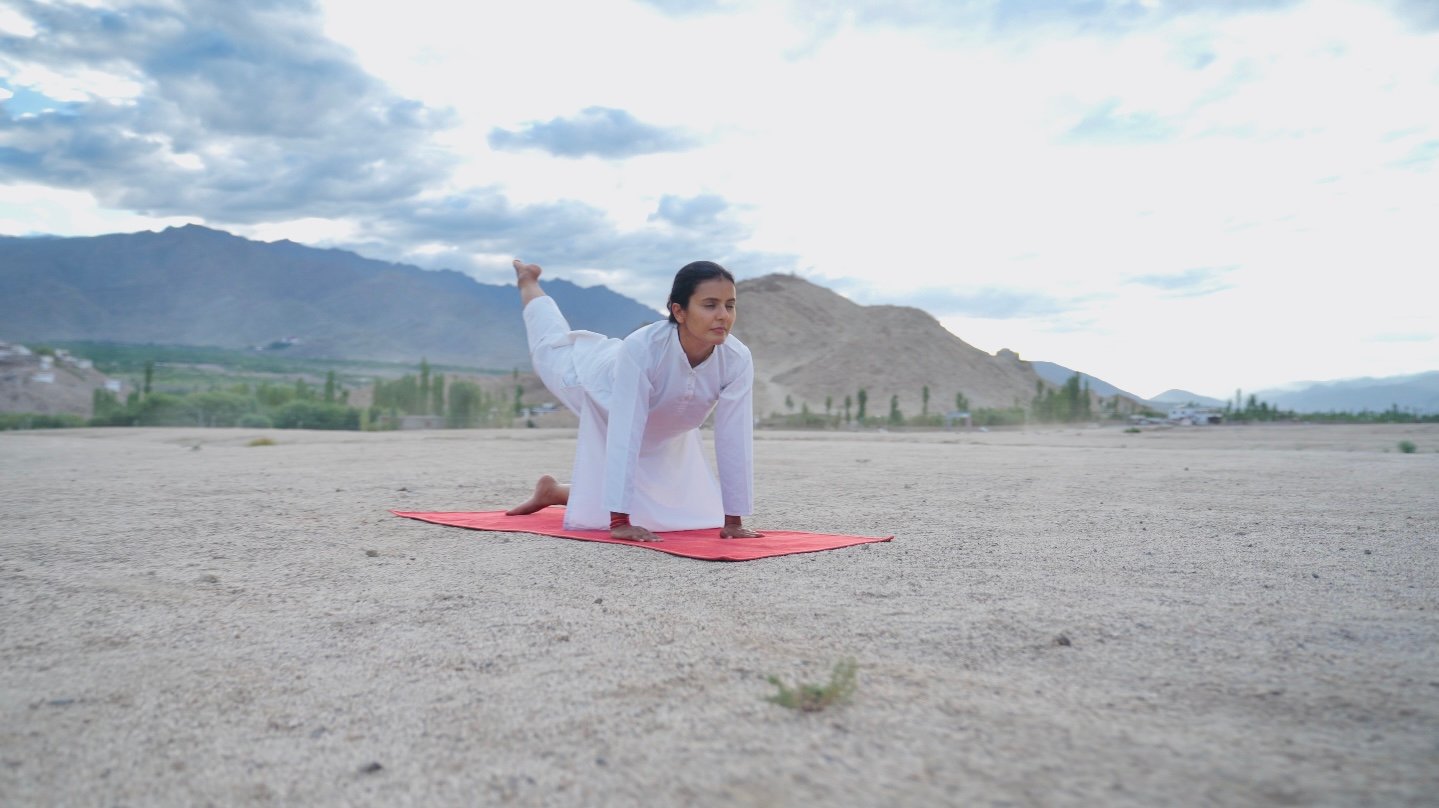
One aspect of Upa-yoga is towards activating the lubricants and energy nodes in the joints so that the rest of the system begins to function.
UPA YOGA
What to Expect
What happens
when you join?
Here is exactly what a Upa Yoga program looks like from the moment you walk in to the day you practice on your own.
01
Before You Arrive
Come as you are
Wear comfortable, loose clothing — similar to what you’d wear for a walk. Bring a water bottle. Eat lightly beforehand or come on an empty stomach if you can. No yoga mat, no equipment, nothing special required.
02
Opening
Settling in — no rush
The session begins with a plain-language introduction to the practice. What it is, how it works, what to expect. There is time to ask any questions before anything physical begins. Nothing is assumed and nothing is rushed.
03
The Practice
Learning the practice — one at a time
Each of the steps is taught clearly before moving to the next. The pace follows the group. Modifications are available at every stage. You will not be asked to do anything your body cannot handle, and you will not be left behind.
04
Individual Attention
Corrections and real learning
Throughout the program the instructor observes and corrects the participants. The group is kept small for exactly this reason.
05
Closing
Full practice run and home guidance
By the end of the program you perform the complete sequence from beginning to end. You also receive clear guidance on how to practice at home — what time works best, how long it takes, and what to be mindful of.
06
After the Program
The practice is yours — for the rest of your life
Once completed, Surya Kriya belongs entirely to you. No app, no subscription, no follow-up class needed. A daily session takes 20 to 45 minutes and can be done at home with no equipment, every morning, for as long as you live.
Health Benefits
Detailed health benefits
of upa yoga practices
Directional Movement
-
Musculoskeletal system
- The proprioception of the upper limb joints improve significantly.
- The co-ordination improves significantly.
- Decreases the stiffness in the joints of upper limb and improves flexibility. -
Cardiovascular system
- It helps in the venous return to the heart.
- When synchronized with breath it helps with strengthening the heart and also improving diseased heart conditions. -
Nervous system
- There is synchronized movement of many muscles in the upper limb. -
Respiratory system
- As the exercise involves breathing along with movements this makes the breathing more synchronized and organized.
Knee Rotation
-
Musculoskeletal system
- This generally increases the core strength of the lower limb significantly.
- The muscles around the knee stretches and contracts and their strength increases.
- The spine stabilizes and the core strength of spine increases.
- The ankle and hip becomes flexible.
- The pelvic floor muscles contract and thus strengthens.
- This improves the tone and posture of the limb.
- It increases the overall stability and gait. -
Cardiovascular system
- Increases the venous return and helps with the circulation.
- Venous stasis and lymph stasis show improvement.
- Patients with venous ulcer, varicose vein problems and lymph edema will show improvement in their symptoms.
Squatting
-
Musculoskeletal system
- Strengthens the hip, knee and ankle joints and tarsal bones.
- Knee joint-stretches the joint capsule; increases synovial secretion and clearance, thereby provides adequate nutrition to the cartilages, clears off the toxins effectively. Protects the joint from arthritis.
- Increases strength of the pelvis.
- Muscles of the gluteal region, pelvic floor muscles and thigh are strengthened. - - Improves strength of sacral and pelvic ligaments.
-
Cardiovascular system
- Circulation improves.
- Better supply to pelvic region.
- Venous return is improved. -
Nervous system
- Stimulation of the nerves in the spinal and pelvic region and lower limbs. -
Organs
- Better functioning of all the organs in the abdomen and pelvis.
-
Reproductive system
- Better functioning of the organs and hormones secreted by them.
Neck Practices
-
Musculoskeletal system
- Improves balance and posture of the body.
- Increased tone and strength of neck muscles.
- Strengthening of the ligaments.
- Better spinal alignment, flexibility and activation. -
Vascular system
- Increased circulation to the brain.
- Regulation and stabilization of blood pressure.
- Decrease of plaque deposition. -
Respiratory system
- Smooth flow of air.
- Better ventilation.
- Better functioning of the sinus. - Better functioning of Thyroid and Parathyroid.
- Immune functions - Helps with prevention of infection.
- Nervous system - Balance of Vagal Nerve & Better brain functioning.
- Reproductive system - Better functioning of the organs and hormones secreted by them.
- The secretion and functioning of the fluid in the cavity spaces of the head like the inner ear fluid, CSF of the brain, vitreous fluid of the eye improves.
Shoulder Rotation
-
Musculoskeletal system
- Stretching of the joint capsule improves synovial secretion and clearance enabling good blood supply.
- Strengthening of the shoulder joints.
- Functioning of the shoulder joint improves gradually, thus maximum range of movements allowed are possible.
- The rotator cuff gets strengthened and rotator cuff injuries in active people like sportsmen are prevented.
- It prevents the occurrence of frozen shoulder in diabetics and also speeds up the recovery in pre-existing conditions - Cardiovascular system - Improves circulation of the shoulders, and arms and over the chest.
- Respiratory system - Improvement in airflow in the upper part of lungs occurs, and by releasing any muscle stiffness this eases the respiration.
- Nervous system - Eases tension in neck and shoulders.
- Breast - Increases firmness of the breast; prevents sagging of the breast.
- Rheumatoid - This relieves the stiffness of the shoulder joint and is helpful in secondary prevention and rehabilitation of the people suffering from crippling condition. Recovery is speedy.
Yoga Namaskar
- Activates the lumbar region of the spine in a tremendous way
- Strengthens the muscles along the spine giving it a reinforcement so that as one ages, the collapsing of the spine which causes pinching of the nerves does not happen.
- It is the best way to regenerate the spine
- A very simple and complete process by itself offering all round benefits for the entire body
Nada Yoga
- Nada Yoga uses the power of sound to activate a particular kind of energy in different parts of the body, bringing a lasting sense of inner pleasantness
Nadi Shuddhi
- Relieve anxiety, stress and psychological tension
- Bring balance to your thoughts, activities and emotions
- Enjoy a deep sense of peace throughout the day
Isha Kriya
- Regular practice of Isha Kriya can enhance your life in many ways. Isha Kriya helps:
- Develop mental clarity and focus
- Create mental stability
- Create peace and wellbeing
Simha Kriya
- Enhances the lung capacity
- Enhances immunity
- Builds Samath Prana, that builds an armor, or Kavacham for oneself against negative impacts
Other benefits
- Relaxes the muscles in various conditions like Rheumatoid arthritis, Osteoarthritis and other conditions like tenosynovitis (inflammation of the tendon sheaths) which can stiffen the joints.
- The co-ordination improves in people who are elderly and who are recovering from stroke.
- De Quervain disease is disease causing pain due to inflammation of synovium around the extensor tendons in the wrist around the thumb. This exercise relieves the pain secondary to this syndrome.
- In patients who had injury to the hands or elbows or who had operations in the hands this will enable quick healing due to increase in circulation.
- In patients recovering from wrist fractures, finger fractures and other elbow fractures this exercise will enable to recover range of movement.
- This will avoid stiffness in patients recovering from heart attack and stroke.
- Compression neuropathies in the upper limb like median nerve compression (Carpal tunnel syndrome), ulnar nerve compression show recovery.
- Weakness due to stroke improves significantly.
- Complex regional pain syndrome is an unknown cause of pain in hands following any injury/surgery. This will help to recover from this syndrome quickly.
Who Is This For?
Upa Yoga is for
anyone who is ready.
Whether you have never stepped onto a mat or you have practiced yoga for years — this practice meets you exactly where you are.
Complete beginners
Every step is taught from scratch. Nothing is assumed. You will leave with a complete practice you can do entirely on your own.
Yoga practitioners
A precise, structured practice distinct from other forms of yoga. Even experienced practitioners find dimensions here they haven’t encountered before.
Daily practice seekers
Something you can do every morning — independently, without a class, without equipment. Built for exactly that.
All age groups
Especially Recommended For
This is for you if…
- You want to start yoga and don't know where to begin
- You already practice and want to add something deeper
- You want precise, step-by-step teaching
- You want a practice that fits a daily morning routine
- You want to work on body, mind and energy together
- You want something you can practice for life
May not be suitable if…
- Patients with wrist replacement or elbow replacement need to discuss with doctor before undertaking this practice.
- People with new fractures should delay the exercise until the fracture has healed as this can lead to pain.
- In patients with osteoarthritis this can cause more pain as the joint reaction force increases considerably. Hence has to be done very slowly and within pain tolerance.
Your Instructor
Taught by someone
who practices daily
I am a certified Classical Hatha Yoga Teacher, trained for 1750+ hours at Sadhguru Gurukulam. After a decade as a data scientist in the corporate world, my life took a transformative turn when I discovered the depth of Classical Hatha Yoga.
Now, through online and in-person programs worldwide, I’m dedicated to sharing these powerful practices, helping others experience the profound joy and transformation that yoga brings.
Classical Hatha Yoga
Sadhguru Gurukulam Certified
Find your
perfect plan
Group Yoga
- Group Yoga
- Scheduled timings
- Monthly: Dates to be announced
- Community access
- Small batch groups